Andrea
Fratto
Resume


ILIA Beauty
Shade Matching Redesign
AI-powered diagnostic quiz driving customer confidence and revenue growth
Role
UX/UI Designer + Product Manager
Timeline
2024 • 3 months
Platform
Octane AI integration with Shopify Plus
Impact
$130 AOV
$4MM revenue
55k pre-launch waitlist
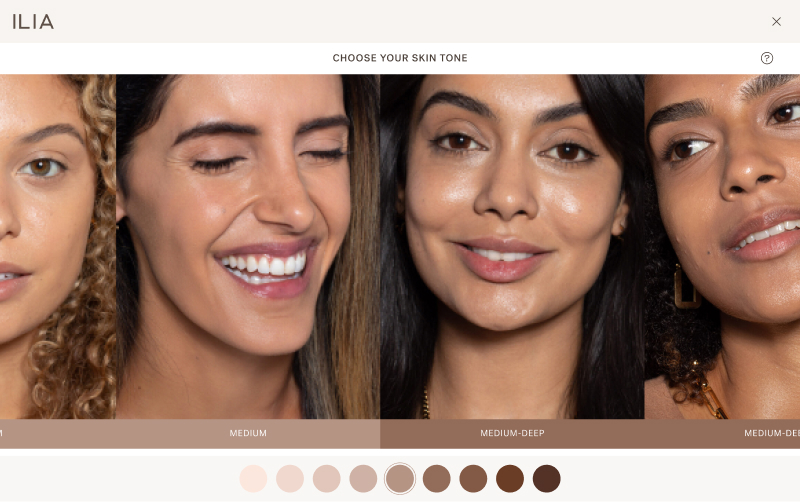
2021
With labels and full-face model photography
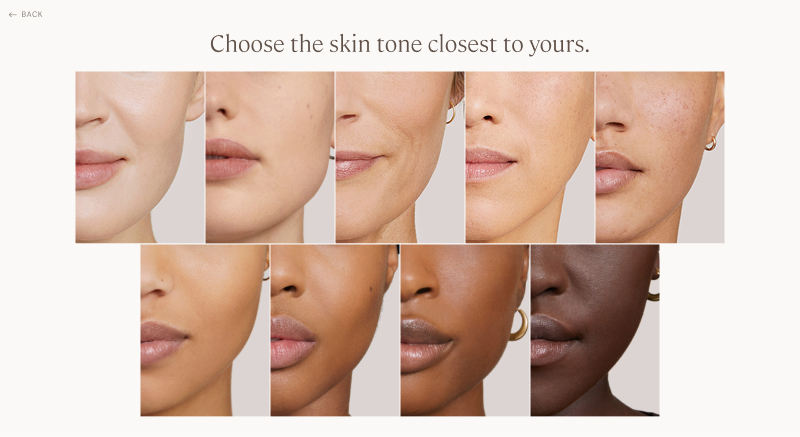
2024
Without labels and cropped to chin + cheek
Context
The Challenge
ILIA's original shade finder was basic—helping customers find foundation shades but not leveraging our full complexion suite or capturing customer data. Shade uncertainty was our #1 purchase barrier, among other challenges:
Business
Remove friction, increase basket size, capture zero-party data.
Shoppers
Find the right shade with confidence across multiple products.
My goal
Design an experience that serves both.
The Impact
Business
- $4MM revenue across 4 quiz experiences
- 10% conversion rate
- $130 average order value (25% increase)
- 55k pre-launch waitlist for Complexion Stick launch
Customer Value
- Personalized shade matches across all 4 complexion products
- Personalized product recommendations
- Confidence-building visual diagnostic to avoid bias
- Zero-party data enabling personalized marketing
Operational Wins
- 10+ campaign launches in year one without engineering resources
- Scalable architecture supporting 3 markets (US, UK, CA)
- Customer "beauty profiles" for lifecycle marketing and VIP loyalty program
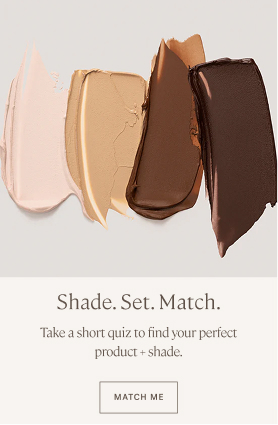
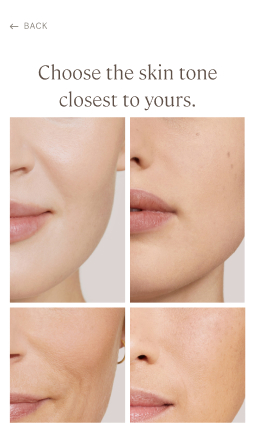
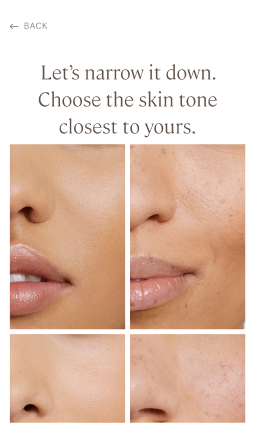
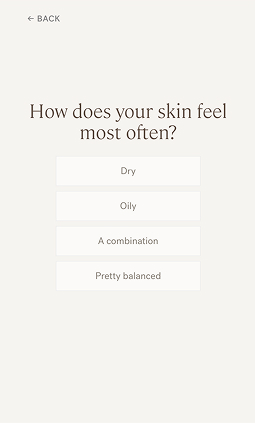
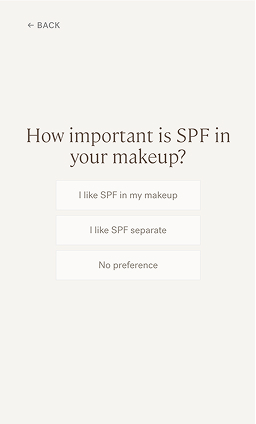
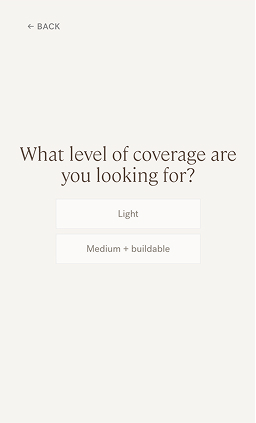
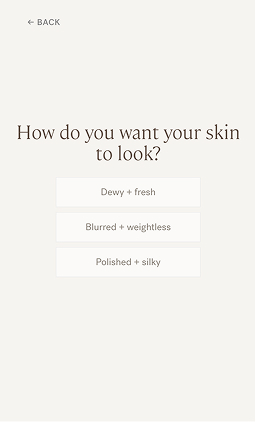
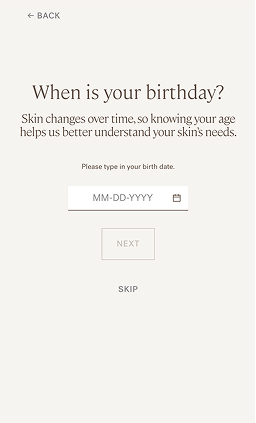
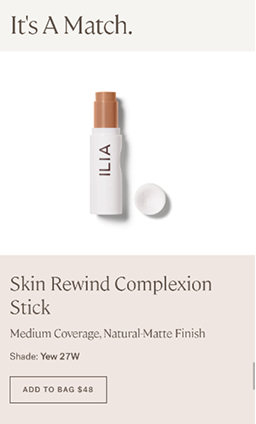
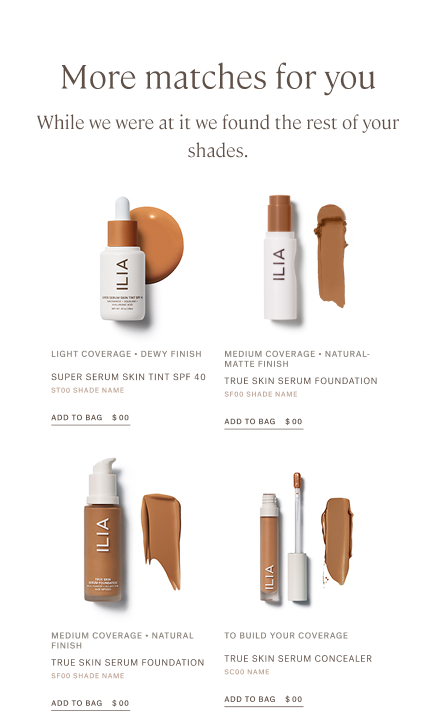
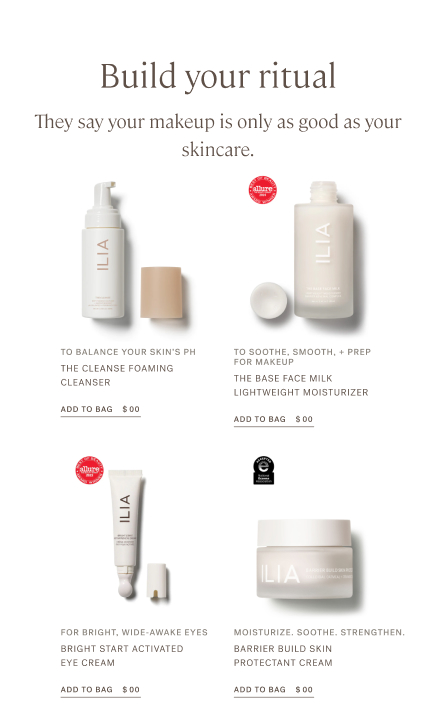
Shade Finder Quiz Landing
Skin tone
Undertone
Questions about skin type, concerns, preferences, and age.
Recommended product + shade match
Your shade matches in all products
Skincare recommendations
More ways to find your shade

Swipe

My Role + Team
My Role
I led end-to-end UX/UI design and acted as de facto product manager, owning:
- Quiz logic, flow, and interaction design across 4 product experiences
- Platform integration and technical specifications (Octane AI + Shopify Plus)
- Brand styling and UI design within third-party platform constraints
- Cross-functional alignment across 4 teams during peak BFCM and Shopify migration
- QA testing across 122 shade match scenarios
Key Partners
Product Education Undertone mapping validation and model skin tone verification.
Engineering Custom Octane AI features and Shopify Plus integration.
Creative Diagnostic photography showing diverse skin tones for visual matching
Constraints
Tight timeline Accelerated 3 weeks for Complexion Stick pre-launch campaign
Complex migration Implementing during Shopify Plus architecture transition
Platform limits Designing brand experience within Octane AI's technical boundaries
3 Key Design Decisions
Key Design Decisions
#1 Visual Diagnostics
Diagnostic images
The Crop & The Hints
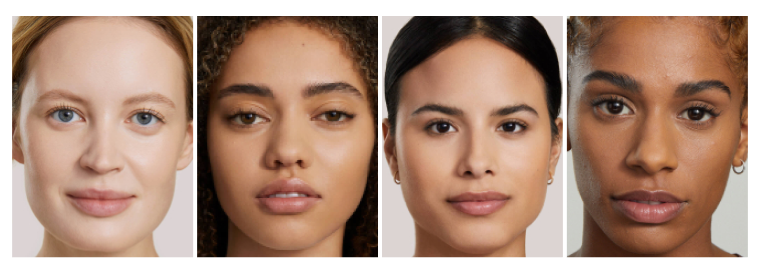
Full Face
People consistently report that if a representative model does not look like them, they don’t think that shade match is right for them.
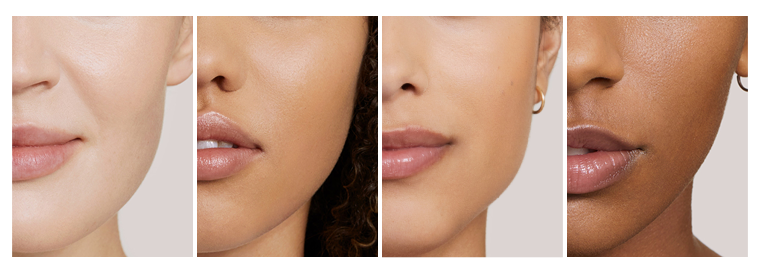
Just the Skin
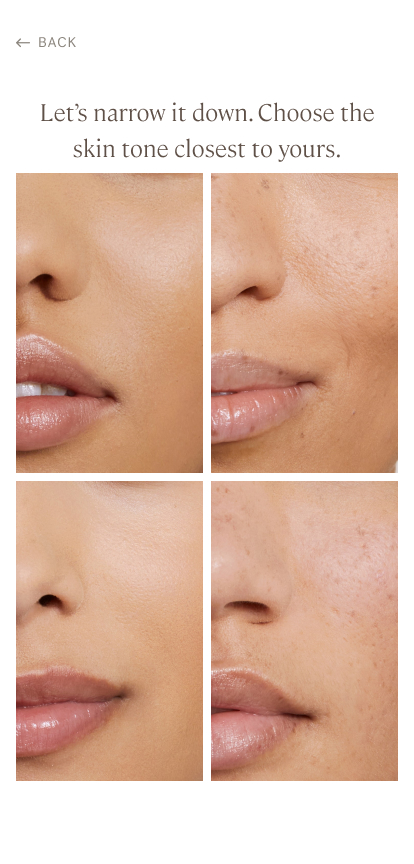
So we cropped to chin & cheek—eliminating characteristics that cause bias or assumption to help people identify a skin tone/undertone that matches theirs. This also mimics common pinch+zoom behavior.
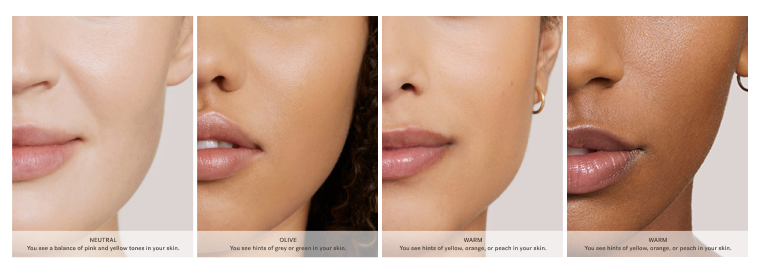
Undertone Hints
A/B testing ruled out even these quiet, subtle undertone hints. Completion times and rates improve without them. With them, the quiz takes longer and they confuse shoppers.
The Challenge
Customers couldn't easily identify or describe their undertone in words—it felt abstract and intimidating, leading to abandoned quizzes and purchase hesitation. So I knew our photography had to be diagnostic—as well as beautiful—to help identify their skin.
The Solution
I replaced subjective-language questions with visual photo arrays showing diverse skin tones with clear undertone examples. Instead of asking "What's your undertone?", we showed images and asked "Which skin tone looks closest to yours?"
The Impact

Fast Completion
Reduced cognitive load with more visual cues and images

Diverse complexions
Inclusive experience with varied skin tones and types while removing bias
Key Design Decisions
#2 Unified Complexion Suite
The Challenge
Many customer inquiries reference their existing complexion shades and skin tones. Properly capturing this across our complexion suite and storing it in the shopper’s “beauty profile” has been a missed opportunity for more comprehensive solutions, sales, and service.
The Solution
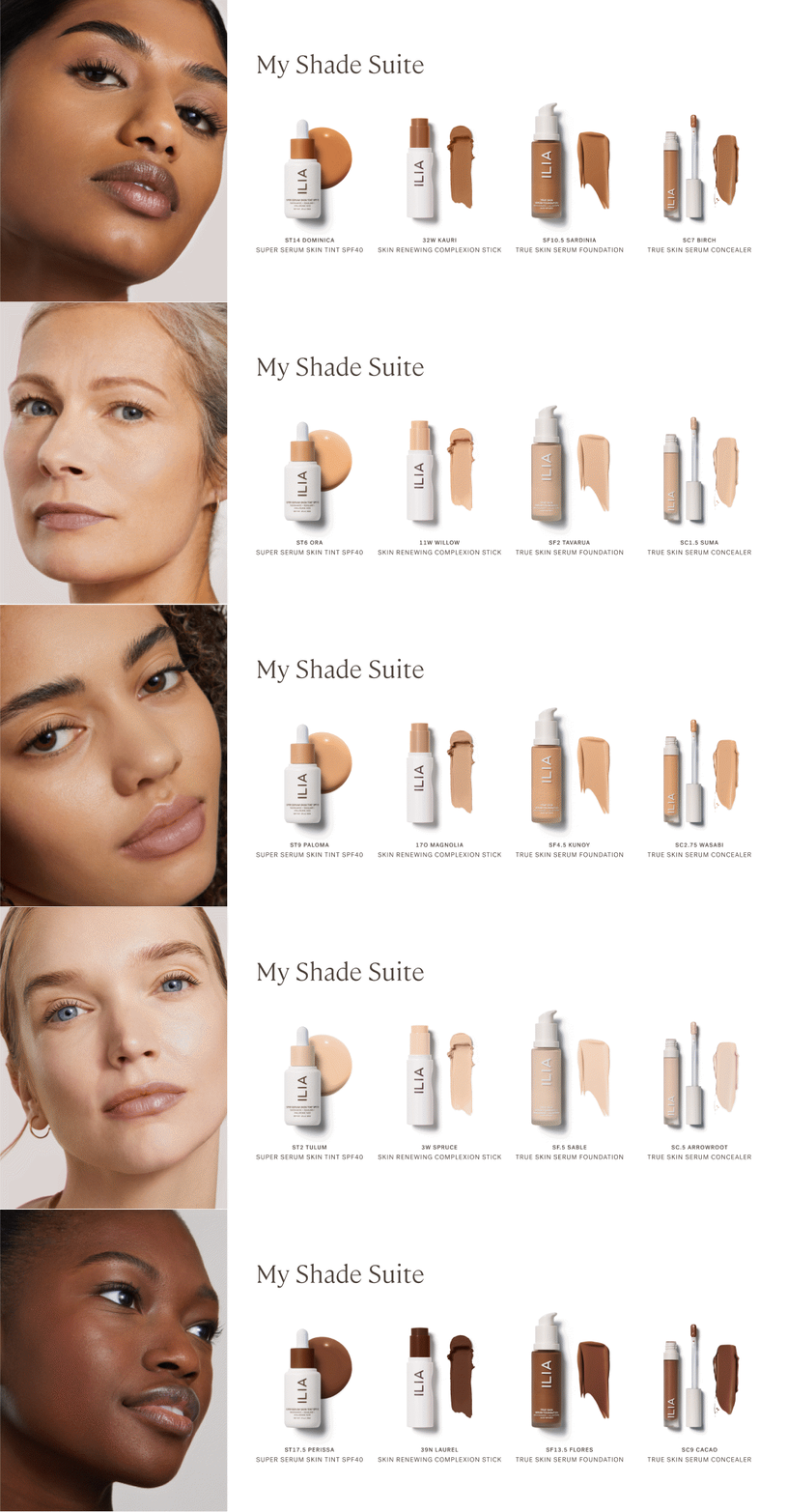
I designed the quiz results page showing personalized shade matches across all 4 products simultaneously—our innovative Skin Tint and Complexion Stick and our classic True Skin Serum Foundation + Concealer—with logic-based recommendations matching their skin type, concerns, and preferences.
When we launch a new product, people refer to their existing match as a baseline for the new product—giving them their shade suite and storing it in their profile makes this info immediately available.
The Impact
$130
AOV
25% increase from $104
$2M
Revenue Opportunity
Frictionless discovery and cross-sell flow eliminating the #1 barrier to purchase.

ILIA Service
Recommendations felt personalized, not pushy

Basket builder
Multiple product orders attributed to shade-matching sessions
Key Design Decisions
#3 Flexible Architecture
Breakthrough Moment
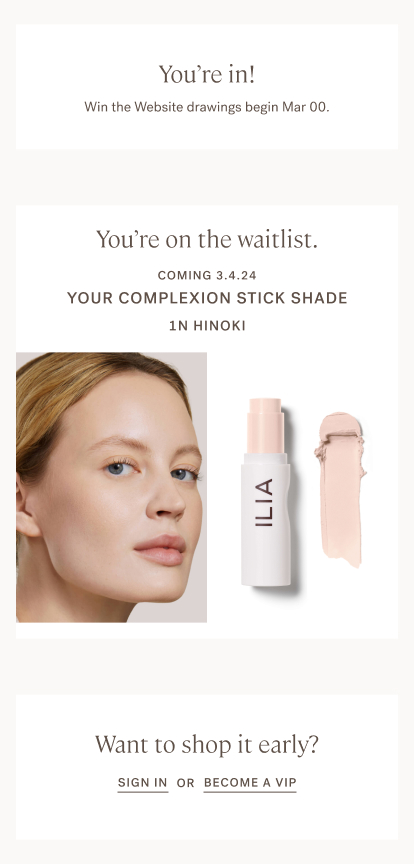
Added Complexion Stick quiz for a pre-launch campaign 3 weeks ahead of schedule.
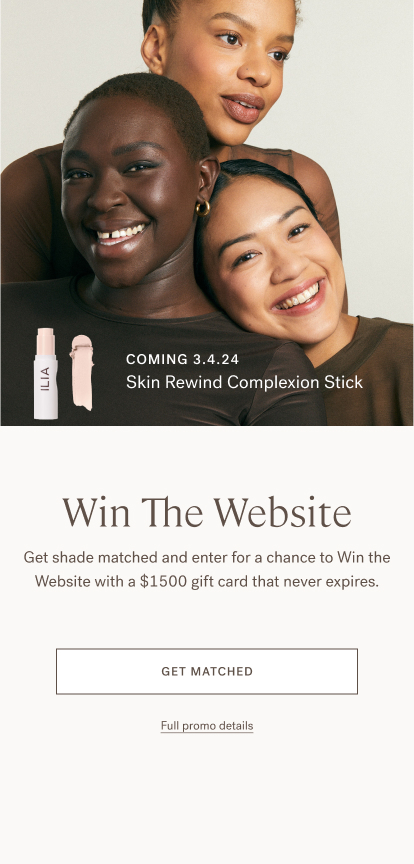
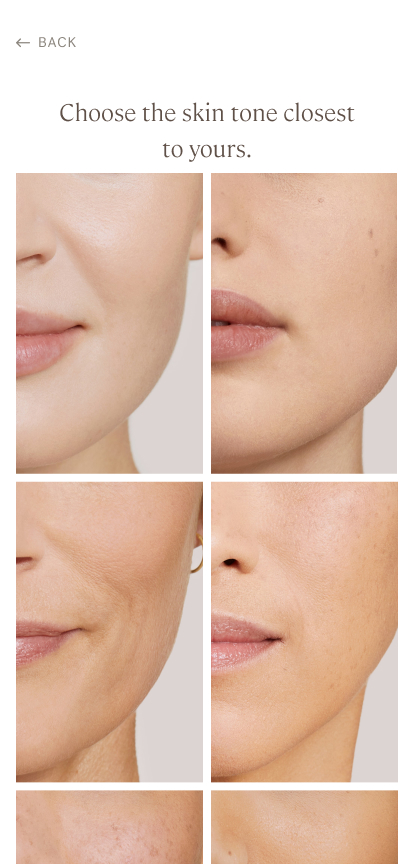

Landing
Skin tone + Undertone
Enter to win
Results + Email
The Challenge
Marketing needed to rapidly launch quiz campaigns tied to product drops and promotions, but custom development was slow and resource-intensive. We needed velocity without sacrificing quality.
The Solution
I architected quiz logic and UI components that could be quickly reconfigured for different campaigns—product launches, waitlist signups, promotional tie-ins—without engineering work. And this became its own template for quiz/contest flows:
- Custom landing screen for email/SMS/social traffic
- Duplicated quiz for unique campaign analytics
- Personalized email with shade match results to build confidence, and contest follow-up details
The Impact
55k
Revenue Opportunity
Waitlist of shade-matched customers ready to purchase at launch
10+
Simplified workflow
Campaigns without dev resources

Quick to market
Marketing moved at campaign speed, not development speed

Personalization
Data collection for lifecycle marketing + personalization
What I Learned
#1 Operating as both designer and PM taught me to balance business velocity and design quality within platform constraints.#2 This project reinforced that business impact and user value are symbiotic—removing friction for customers drove 25% AOV increase. When you deeply understand user needs and business goals, you design solutions that serve both.
Key Insights
Platform constraints force creative solutions. Designing within Octane AI's limits pushed me to be more strategic about what really mattered for our MVP vs nice-to-haves.
Cross-functional alignment is the work. With 4 teams involved during BFCM and a Shopify migration, constant communication and shared vision kept us moving fast without breaking things.
Zero-party data is a competitive advantage. The quiz doesn't just match shades—it builds customer profiles (and ownership + confidence) that power personalization across the entire lifecycle.
Leverage Platforms
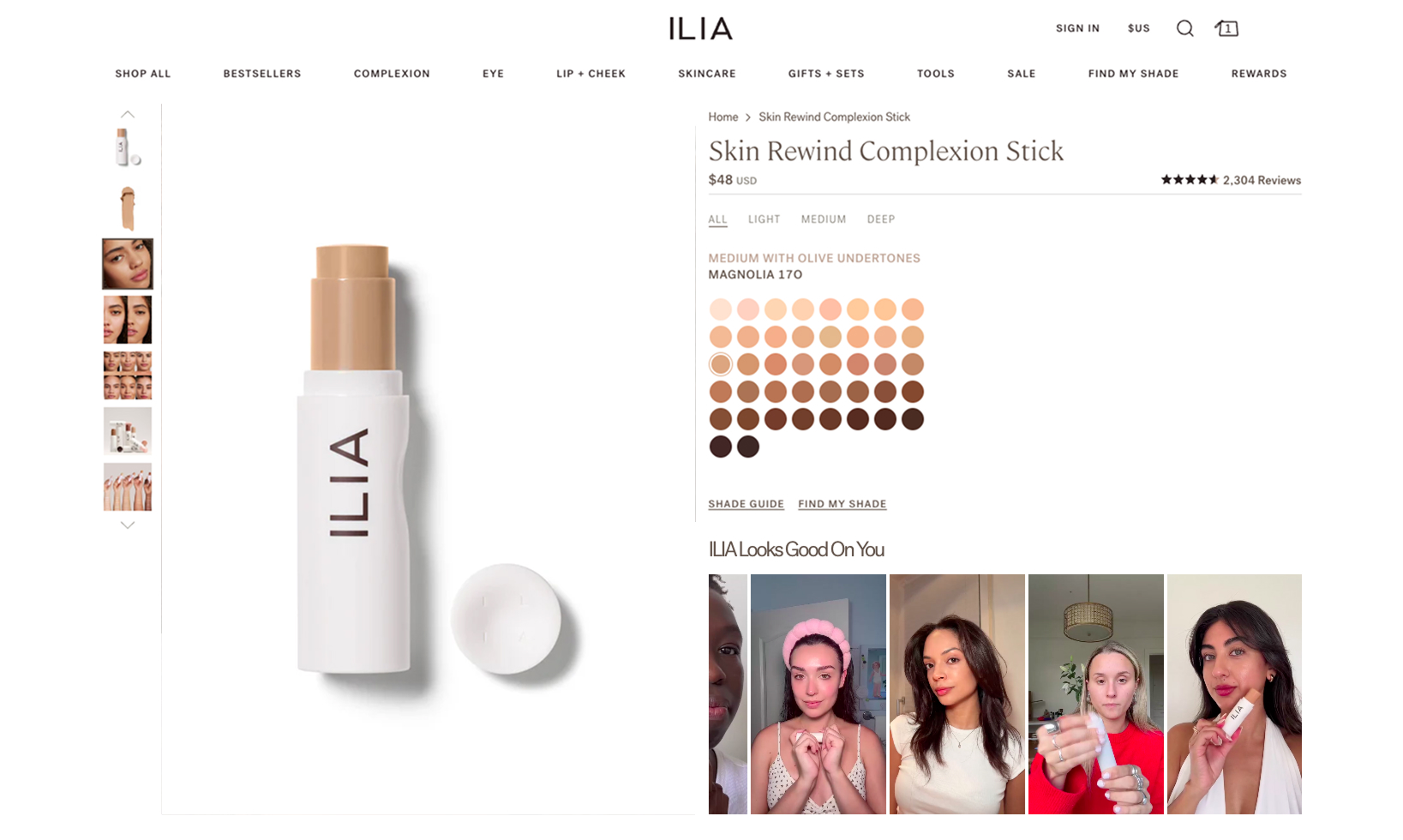
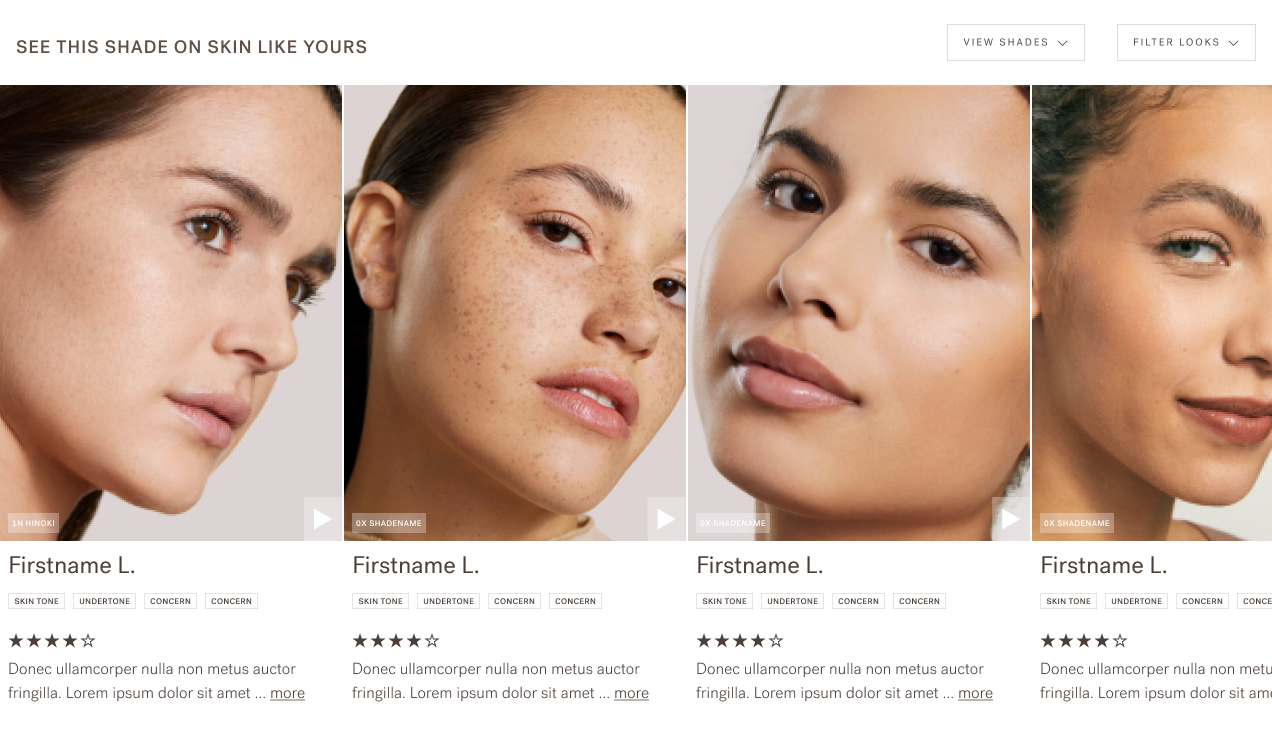
Bring UGC video into ILIABeauty.com to see people who look like them wearing the products and shades.
This mimics online shopping/research behavior.
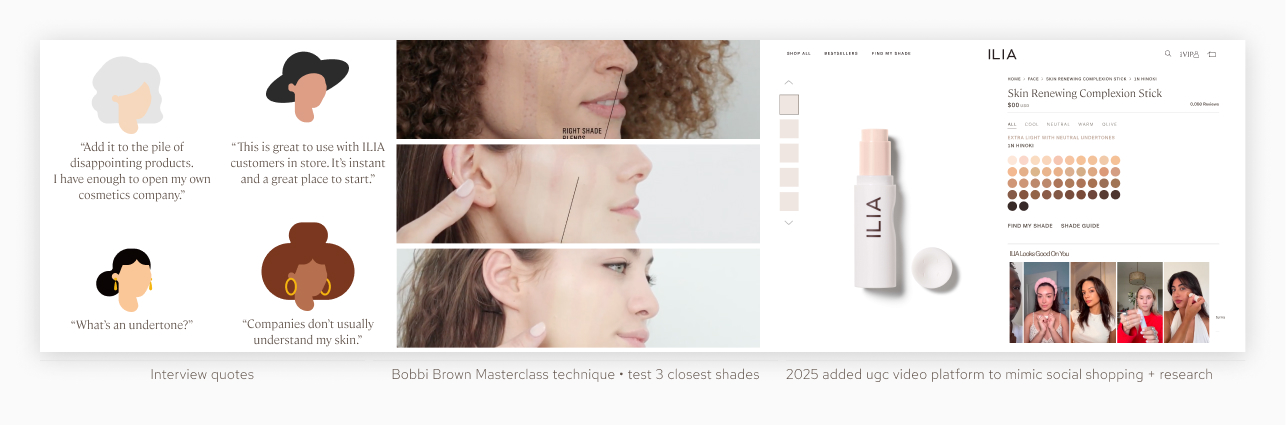
Test 3 shades
Inspired by Bobbi Brown’s Masterclass technique, track emerging tech to virtually try on 3 shades at once.
This mimics IRL shopping behavior.
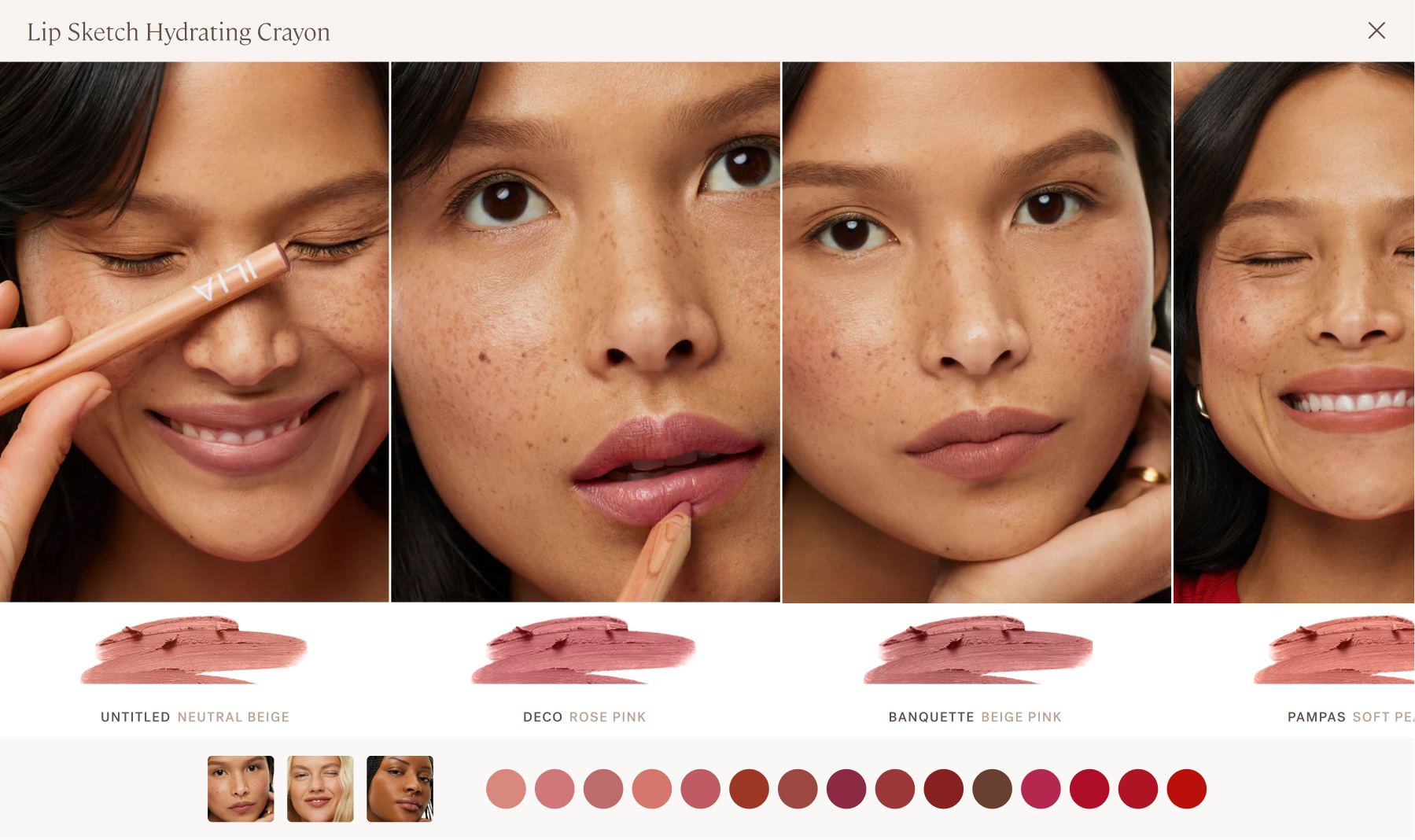
Shade-specific Technology
Explore UGC shade-matching platforms already in this space. HUE technology.
This mimics online shopping/research behavior.
Roadmap
Future Iterations
Exploring and evolving the techniques & technology
With emerging AR and computer vision technology, we could offer virtual try-on and photo-based shade matching with higher accuracy. The data foundation and modular architecture we built makes future AI/ML enhancements possible without rebuilding from scratch.Recent validation: Octane AI announced photo-based personalization features in December 2024—exactly the evolution we anticipated when architecting for future enhancement.
Featured Projects
Ilia Beauty
Compare Shades
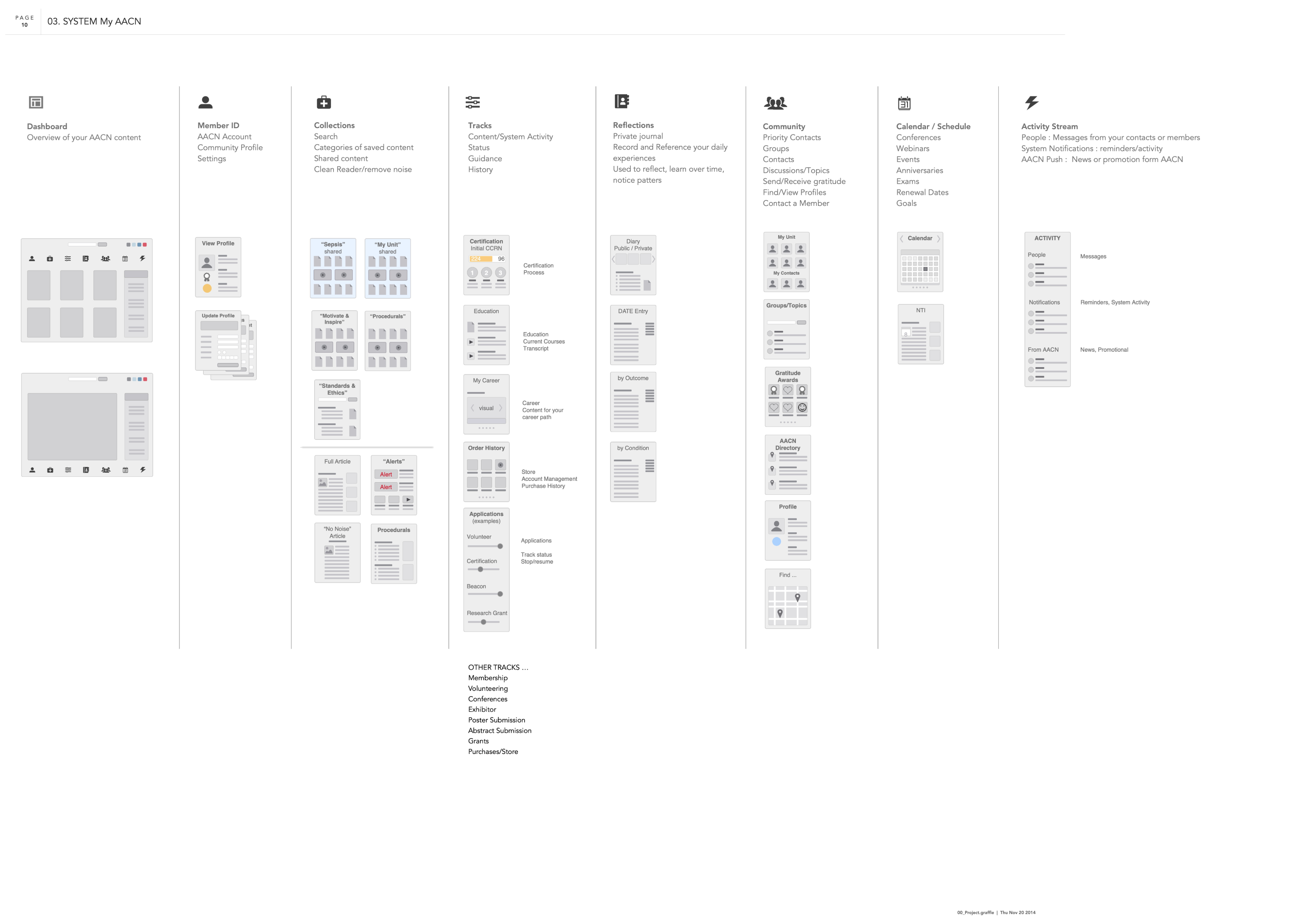
American Association of Cardiac-Care Nurses
The Whole Nurse Platform
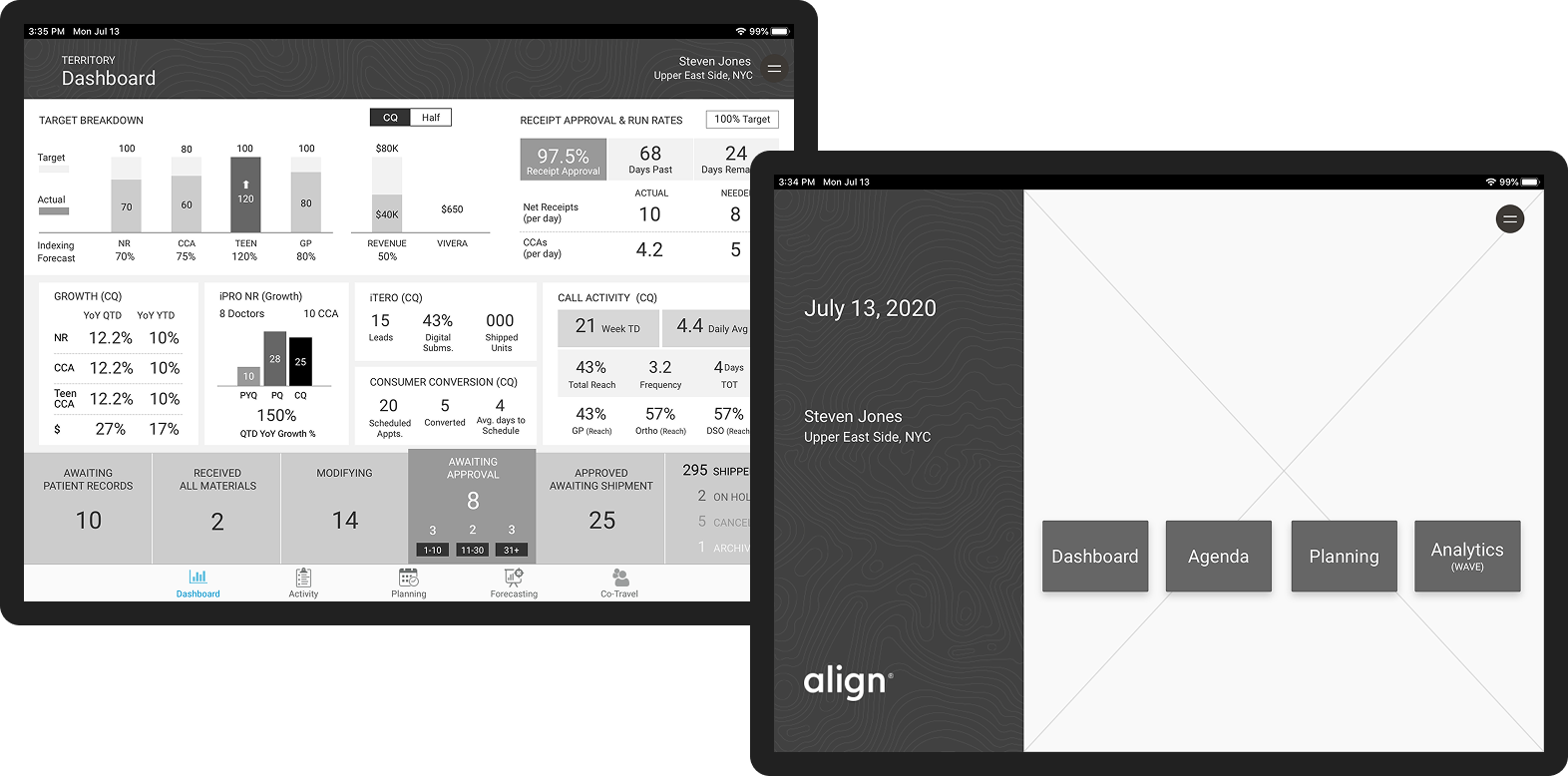
Align Technology
Unified Global CRM
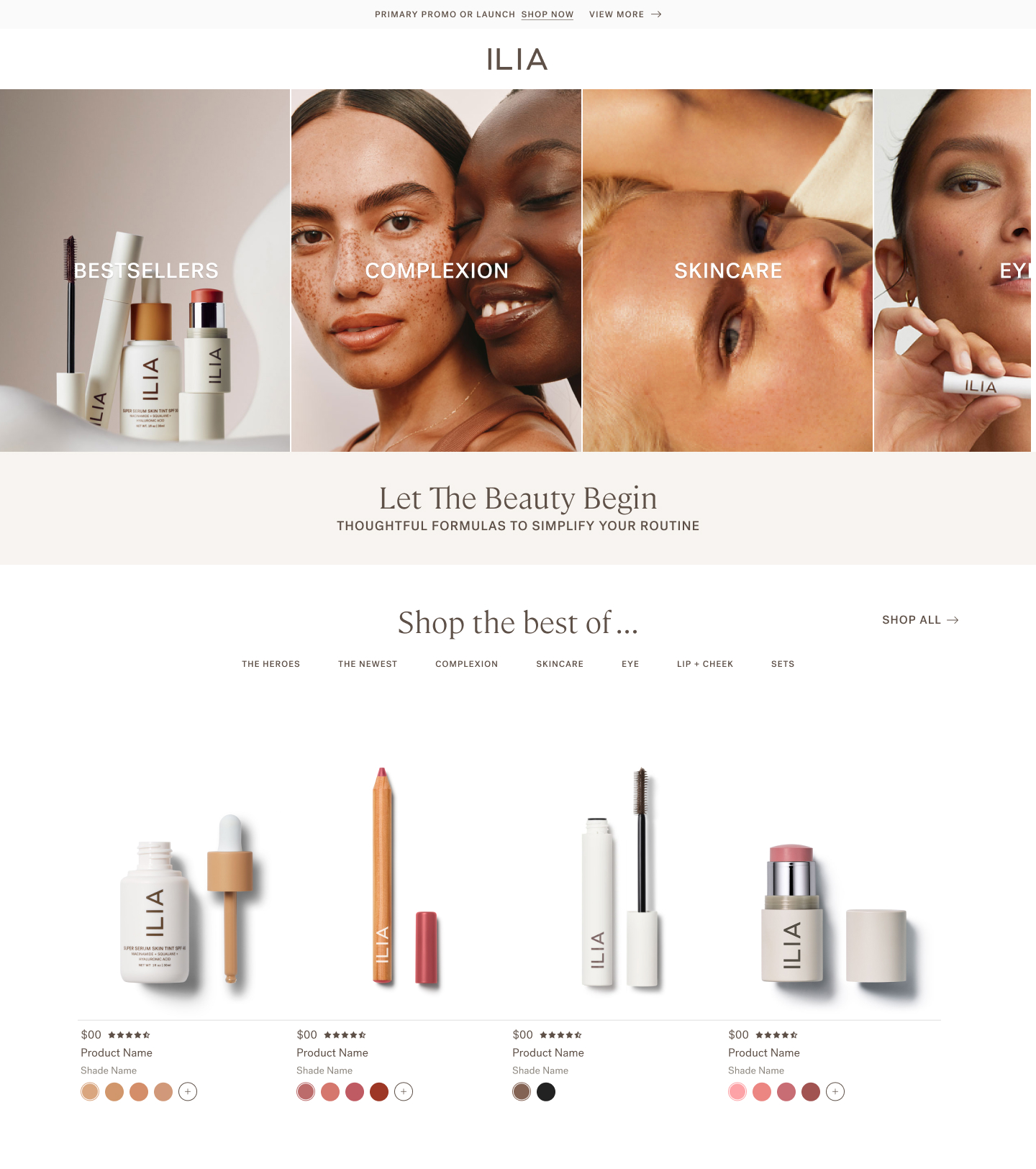
Ilia Beauty
Show & Sell
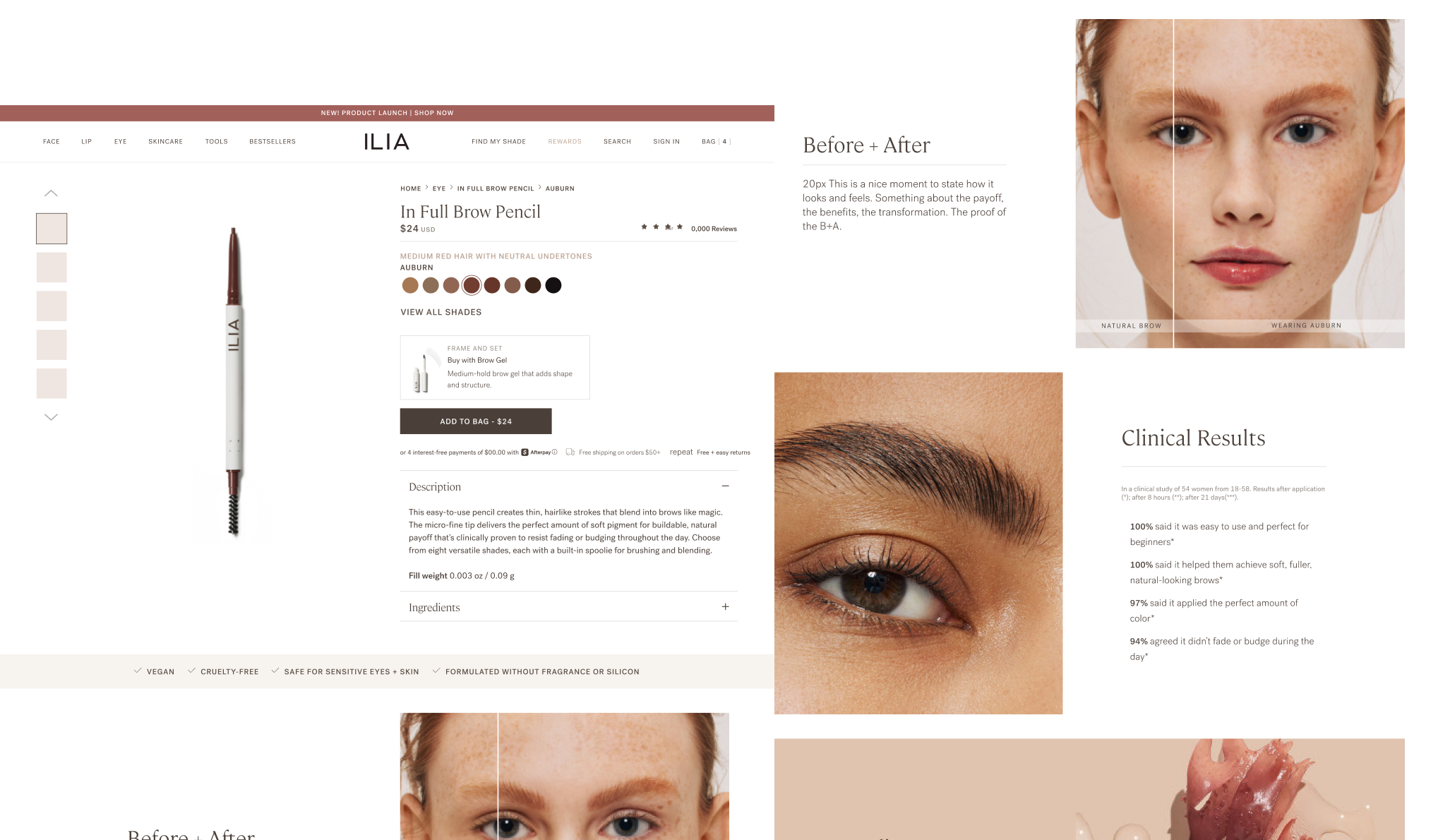
Ilia Beauty
Demo vs. Details
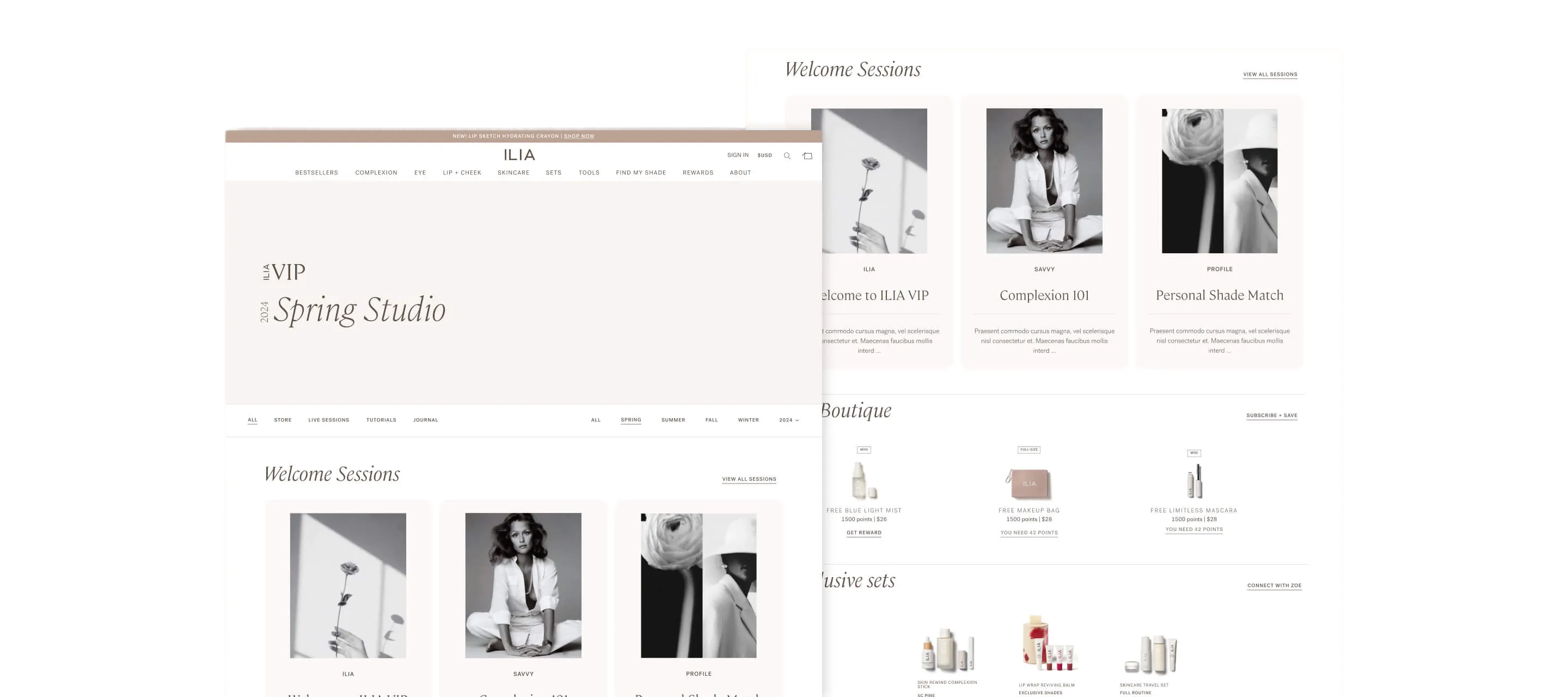
Ilia Beauty
Let’s Get Personal
Coming
Soon
Andrea Fratto
Resume
ILIA Beauty
Shade Matching Redesign
AI-powered diagnostic quiz driving customer confidence and revenue growth
Role
UX/UI Designer + Product Manager
Timeline
2024 • 3 months
Platform
Octane AI integration with Shopify Plus
Impact
$130 AOV
$4MM revenue
55k pre-launch waitlist
2021
With labels and full-face model photography
2024
Without labels and cropped to chin + cheek
The Challenge
The Impact
ILIA's original shade finder was basic—helping customers find foundation shades but not leveraging our full complexion suite, capturing customer data, or providing meaningful analytics. Shade uncertainty was our #1 purchase barrier, among other challenges:
Business
Remove friction, increase basket size, capture zero-party data.
Shoppers
Find the right shade with confidence across multiple products.
My goal
Design an experience that serves both.
Business
- $4MM revenue across 4 quiz experiences
- 10% conversion rate
- $130 average order value (25% increase)
- 55k pre-launch waitlist for Complexion Stick launch
Customer Value
- Personalized shade matches across all 4 complexion products
- Personalized product recommendations
- Confidence-building visual diagnostic to avoid bias
- Zero-party data enabling personalized marketing
Operational Wins
- 10+ campaign launches in year one without engineering resources
- Scalable architecture supporting 3 markets (US, UK, CA)
- Customer "beauty profiles" for lifecycle marketing and VIP loyalty program
Shade Finder Quiz Landing
Skin tone
Undertone
Questions about skin type, concerns, preferences, and age.
Recommended product + shade match
Your shade matches in all products
Skincare recommendations
More ways to find your shade
Swipe
My Role + Team
My Role
I led end-to-end UX/UI design and acted as de facto product manager, owning:
- Quiz logic, flow, and interaction design across 4 product experiences
- Platform integration and technical specifications (Octane AI + Shopify Plus)
- Brand styling and UI design within third-party platform constraints
- Cross-functional alignment across 4 teams during peak BFCM and Shopify migration
- QA testing across 122 shade match scenarios
Key Partners
Product Education Undertone mapping validation and model skin tone verification.
Engineering Custom Octane AI features and Shopify Plus integration.
Creative Diagnostic photography showing diverse skin tones for visual matching
Constraints
Tight timeline Accelerated 3 weeks for Complexion Stick pre-launch campaign
Complex migration Implementing during Shopify Plus architecture transition
Platform limits Designing brand experience within Octane AI's technical boundaries
3 Key Design Decisions
Key Design Decisions
#1 Visual Diagnostics
Diagnostic images
The Crop & The Hints
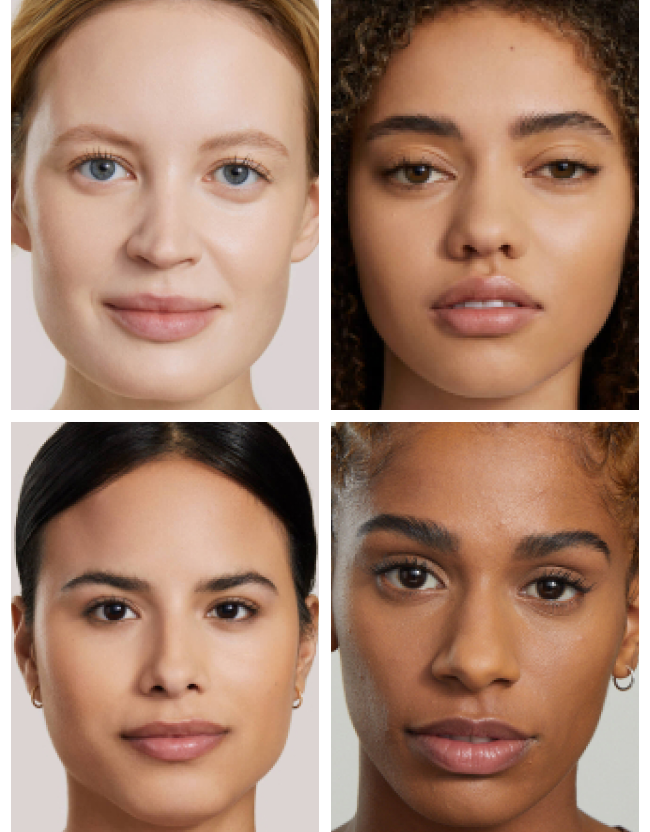
Full Face
People consistently report that if a representative model does not look like them, they don’t think that shade match is right for them.
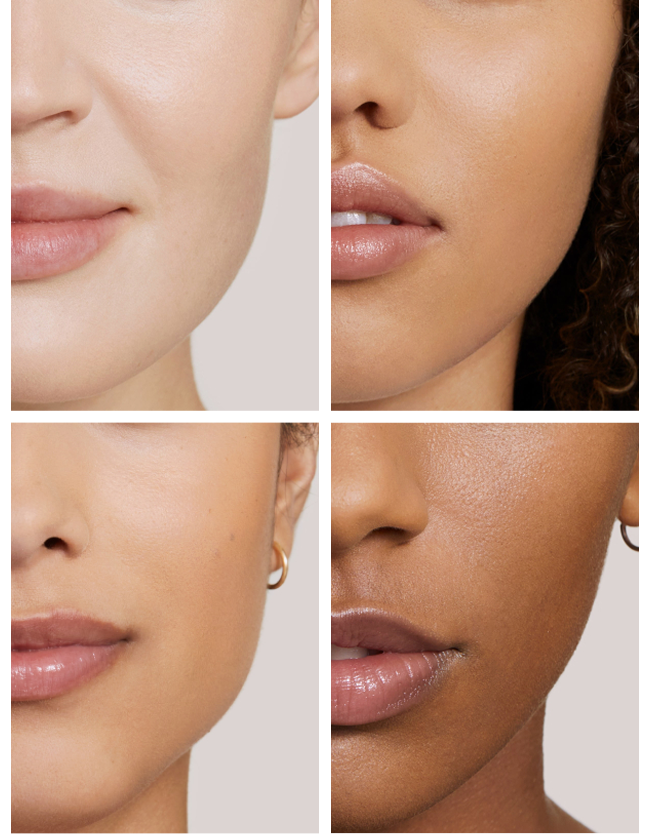
Just the Skin
So we cropped to chin & cheek—eliminating characteristics that cause bias or assumption to help people identify a skin tone/undertone that matches theirs. This also mimics common pinch+zoom behavior.
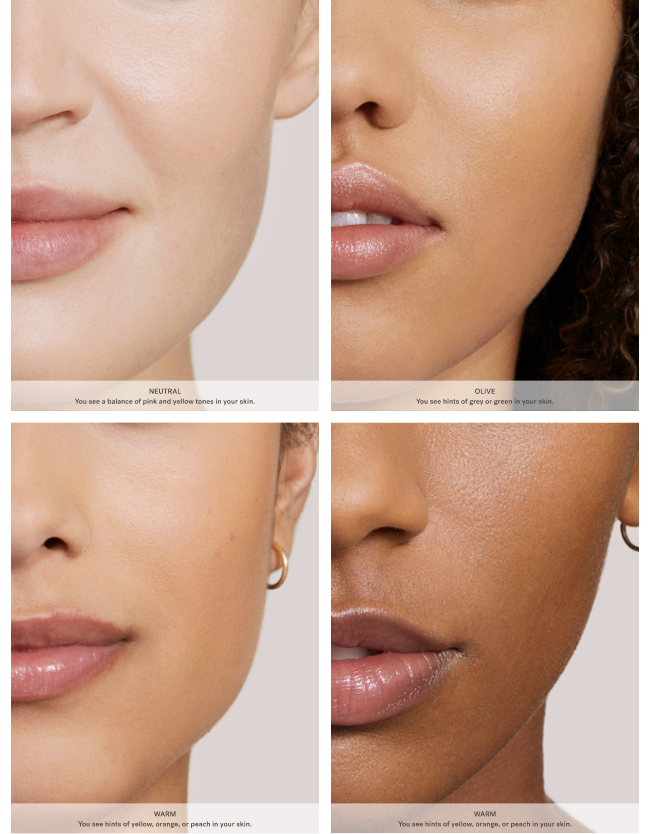
With Undertone Hints
A/B testing ruled out even these quiet, subtle undertone hints. Completion times and rates improve without them. With them, the quiz takes longer and they confuse shoppers.
The Challenge
Customers couldn't easily identify or describe their undertone in words—it felt abstract and intimidating, leading to abandoned quizzes and purchase hesitation. So I knew our photography had to be diagnostic—as well as beautiful—to help identify their skin.
The Solution
I replaced subjective-language questions with visual photo arrays showing diverse skin tones with clear undertone examples. Instead of asking "What's your undertone?", we showed images and asked "Which skin tone looks closest to yours?"
The Impact
Fast Completion
Reduced cognitive load with more visual cues and images
Diverse complexions
Inclusive experience with varied skin tones and types while removing bias
Key Design Decisions
#2 Unified Complexion Suite
The Challenge
Many customer inquiries reference their existing complexion shades and skin tones. Properly capturing this across our complexion suite and storing it in the shopper’s “beauty profile” has been a missed opportunity for more comprehensive solutions, sales, and service.
The Solution
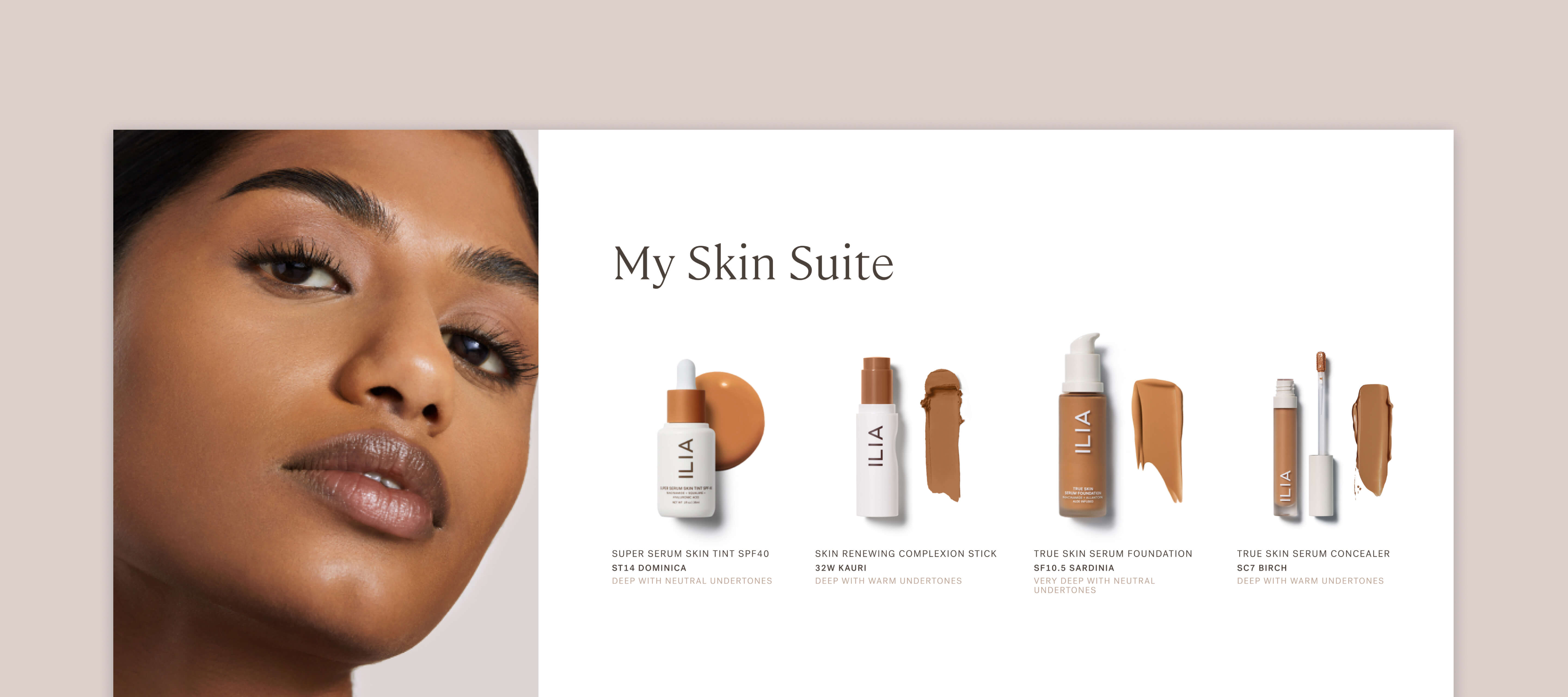
I designed the quiz results page showing personalized shade matches across all 4 products simultaneously—our innovative Skin Tint and Complexion Stick and our classic True Skin Serum Foundation + Concealer—with logic-based recommendations matching their skin type, concerns, and preferences.
When we launch a new product, people refer to their existing match as a baseline for the new product—giving them their shade suite and storing it in their profile makes this info immediately available.
The Impact
$130
AOV
25% increase from $104
$2M
Revenue Opportunity
Frictionless discovery and cross-sell flow eliminating the #1 barrier to purchase.
ILIA Service
Recommendations felt personalized, not pushy
Basket builder
Multiple product orders attributed to shade-matching sessions
Key Design Decisions
#3 Flexible Architecture
Breakthrough Moment
Added Complexion Stick quiz for a pre-launch campaign 3 weeks ahead of schedule.
Landing
Skin tone + Undertone
Enter to win
Results + Email
The Challenge
Marketing needed to rapidly launch quiz campaigns tied to product drops and promotions, but custom development was slow and resource-intensive. We needed velocity without sacrificing quality.
The Solution
I architected quiz logic and UI components that could be quickly reconfigured for different campaigns—product launches, waitlist signups, promotional tie-ins—without engineering work. And this became its own template for quiz/contest flows:
- Custom landing screen for email/SMS/social traffic
- Duplicated quiz for unique campaign analytics
- Personalized email with shade match results to build confidence, and contest follow-up details
The Impact
55k
Revenue Opportunity
Waitlist of shade-matched customers ready to purchase at launch
10+
Simplified workflow
Campaigns without dev resources
Quick to market
Marketing moved at campaign speed, not development speed
Personalization
Data collection for lifecycle marketing + personalization
What I Learned
#1 Operating as both designer and PM taught me to balance business velocity and design quality within platform constraints.#2 This project reinforced that business impact and user value are symbiotic—removing friction for customers drove 25% AOV increase. When you deeply understand user needs and business goals, you design solutions that serve both.
Key Insights
Platform constraints force creative solutions. Designing within Octane AI's limits pushed me to be more strategic about what really mattered for our MVP vs nice-to-haves.
Cross-functional alignment is the work. With 4 teams involved during BFCM and a Shopify migration, constant communication and shared vision kept us moving fast without breaking things.
Zero-party data is a competitive advantage. The quiz doesn't just match shades—it builds customer profiles (and ownership + confidence) that power personalization across the entire lifecycle.
Leverage Platforms
Bring UGC video into ILIABeauty.com to see people who look like them wearing the products and shades.
This mimics online shopping/research behavior.
Test 3 shades
Inspired by Bobbi Brown’s Masterclass technique, track emerging tech to virtually try-on 3 shades at once.
This mimics IRL shopping behavior.
Shade-specific Technology
Explore UGC shade-matching platforms already in this space. HUE technology.
This mimics online shopping/research behavior.
Roadmap
Future Iterations
Exploring and evolving the techniques & technology
With emerging AR and computer vision technology, we could offer virtual try-on and photo-based shade matching with higher accuracy. The data foundation and modular architecture we built makes future AI/ML enhancements possible without rebuilding from scratch.Recent validation: Octane AI announced photo-based personalization features in December 2024—exactly the evolution we anticipated when architecting for future enhancement.
Featured Projects
Ilia Beauty
Compare Shades
American Association of Cardiac-Care Nurses
The Whole Nurse Platform
Align Technology
Unified Global CRM
Ilia Beauty
Show & Sell
Ilia Beauty
Demo vs. Details
Ilia Beauty
Let’s Get Personal
Coming
Soon
ILIA Beauty
Shade Matching Redesign
AI-powered diagnostic quiz driving customer confidence and revenue growth
Role
UX/UI Designer + Product Manager
Timeline
2024 • 3 months
Platform
Octane AI integration with Shopify Plus
Impact
$130 AOV
$4MM revenue
55k pre-launch waitlist
2021
With labels and full-face model photography
2024
Without labels and cropped to chin + cheek
The Challenge
The Impact
ILIA's original shade finder was basic—helping customers find foundation shades but not leveraging our full complexion suite, capturing customer data, or providing meaningful analytics. Shade uncertainty was our #1 purchase barrier, among our other challenges:
Business
Remove friction, increase basket size, capture zero-party data.
Shoppers
Find the right shade with confidence across multiple products.
My goal
Design an experience that serves both.
Business
- $4MM revenue across 4 quiz experiences
- 10% conversion rate
- $130 average order value (25% increase)
- 55k pre-launch waitlist for Complexion Stick launch
Customer Value
- Personalized shade matches across all 4 complexion products
- Personalized product recommendations
- Confidence-building visual diagnostic to avoid bias
- Zero-party data enabling personalized marketing
Operational Wins
- 10+ campaign launches in year one without engineering resources
- Scalable architecture supporting 3 markets (US, UK, CA)
- Customer "beauty profiles" for lifecycle marketing and VIP loyalty program
Shade Finder Quiz Landing
Skin tone
Undertone
Questions about skin type, concerns, preferences, and age.
Recommended product + shade match
Your shade matches in all products
Skincare recommendations
More ways to find your shade
Swipe
My Role + Team
My Role
I led end-to-end UX/UI design and acted as de facto product manager, owning:
- Quiz logic, flow, and interaction design across 4 product experiences
- Platform integration and technical specifications (Octane AI + Shopify Plus)
- Brand styling and UI design within third-party platform constraints
- Cross-functional alignment across 4 teams during peak BFCM and Shopify migration
- QA testing across 122 shade match scenarios
Key Partners
Product Education Undertone mapping validation and model skin tone verification.
Engineering Custom Octane AI features and Shopify Plus integration.
Creative Diagnostic photography showing diverse skin tones for visual matching
Constraints
Tight timeline Accelerated 3 weeks for Complexion Stick pre-launch campaign
Complex migration Implementing during Shopify Plus architecture transition
Platform limits Designing brand experience within Octane AI's technical boundaries
3 Key Design Decisions
Key Design Decisions
#1 Visual Diagnostics
Diagnostic images
The Crop & The Hints
Full Face
People consistently report that if a representative model does not look like them, they don’t think that shade match is right for them.
Just the Skin
So we cropped to chin & cheek—eliminating characteristics that cause bias or assumption to help people identify a skin tone/undertone that matches theirs. This also mimics common pinch+zoom behavior.
With Undertone Hints
A/B testing ruled out even these quiet, subtle undertone hints. Completion times and rates improve without them. With them, the quiz takes longer and they confuse shoppers.
The Challenge
Customers couldn't easily identify or describe their undertone in words—it felt abstract and intimidating, leading to abandoned quizzes and purchase hesitation. So I knew our photography had to be diagnostic—as well as beautiful—to help identify their skin.
The Solution
I replaced subjective-language questions with visual photo arrays showing diverse skin tones with clear undertone examples. Instead of asking "What's your undertone?", we showed images and asked "Which skin tone looks closest to yours?"
The Impact
Fast Completion
Reduced cognitive load with more visual cues and images
Diverse complexions
Inclusive experience with varied skin tones and types while removing bias
Key Design Decisions
#2 Unified Complexion Suite
The Challenge
Many customer inquiries reference their existing complexion shades and skin tones. Properly capturing this across our complexion suite and storing it in the shopper’s “beauty profile” has been a missed opportunity for more comprehensive solutions, sales, and service.
The Solution
I designed the quiz results page showing personalized shade matches across all 4 products simultaneously—our innovative Skin Tint and Complexion Stick and our classic True Skin Serum Foundation + Concealer—with logic-based recommendations matching their skin type, concerns, and preferences.
When we launch a new product, people refer to their existing match as a baseline for the new product—giving them their shade suite and storing it in their profile makes this info immediately available.
The Impact
$130
AOV
25% increase from $104
$2M
Revenue Opportunity
Frictionless discovery and cross-sell flow eliminating the #1 barrier to purchase.
ILIA Service
Recommendations felt personalized, not pushy
Basket builder
Multiple product orders attributed to shade-matching sessions
Key Design Decisions
#3 Flexible Architecture
Breakthrough Moment
Added Complexion Stick quiz for a pre-launch campaign 3 weeks ahead of schedule.
Landing
Skin tone + Undertone
Enter to win
Results + Email
The Challenge
Marketing needed to rapidly launch quiz campaigns tied to product drops and promotions, but custom development was slow and resource-intensive. We needed velocity without sacrificing quality.
The Solution
I architected quiz logic and UI components that could be quickly reconfigured for different campaigns—product launches, waitlist signups, promotional tie-ins—without engineering work. And this became its own template for quiz/contest flows:
- Custom landing screen for email/SMS/social traffic
- Duplicated quiz for unique campaign analytics
- Personalized email with shade match results to build confidence, and contest follow-up details
The Impact
55k
Revenue Opportunity
Waitlist of shade-matched customers ready to purchase at launch
10+
Simplified workflow
Campaigns without dev resources
Quick to market
Marketing moved at campaign speed, not development speed
Personalization
Data collection for lifecycle marketing + personalization
What I Learned
#1 Operating as both designer and PM taught me to balance business velocity and design quality within platform constraints.#2 When you deeply understand user needs and business goals, you design solutions that serve both. This project reinforced that business impact and user value are symbiotic—removing friction for customers drove a 25% AOV increase.
Key Insights
Platform constraints force creative solutions. Designing within Octane AI's limits pushed me to be more strategic about what really mattered for our MVP vs nice-to-haves.
Cross-functional alignment is the work. With 4 teams involved during BFCM and a Shopify migration, constant communication and shared vision kept us moving fast without breaking things.
Zero-party data is a competitive advantage. The quiz doesn't just match shades—it builds customer profiles (and ownership + confidence) that power personalization across the entire lifecycle.
Leverage Platforms
Bring UGC video into ILIABeauty.com to see people who look like them wearing the products and shades.
This mimics online shopping/research behavior.
Test 3 shades
Inspired by Bobbi Brown’s Masterclass technique, track emerging tech to virtually try-on 3 shades at once.
This mimics IRL shopping behavior.
Shade-specific Technology
Explore UGC shade-matching platforms already in this space. HUE technology.
This mimics online shopping/research behavior.
Roadmap
Future Iterations
Exploring and evolving the techniques & technology
With emerging AR and computer vision technology, we could offer virtual try-on and photo-based shade matching with higher accuracy. The data foundation and modular architecture we built makes future AI/ML enhancements possible without rebuilding from scratch.Recent validation: Octane AI announced photo-based personalization features in December 2024—exactly the evolution we anticipated when architecting for future enhancement.
Featured Projects
Ilia Beauty
Compare Shades
American Association of Cardiac-Care Nurses
The Whole Nurse Platform
Align Technology
Unified Global CRM
Ilia Beauty
Show & Sell
Ilia Beauty
Demo vs. Details
Ilia Beauty
Let’s Get Personal
Coming
Soon